1
Chẩn đoán
Đánh giá mức sẵn sàng làm Business Analyst
Chấm từng chiều kỹ năng và cho ra hồ sơ — biết mình đứng ở đâu trước.
Làm bài nàyCách áp dụng OKR cho SaaS, software company, internal product, product-as-service, Data-as-a-Service, outsourced product team và multi-company setup.
Đăng nhập để đánh dấu kỹ năng và theo dõi tiến độ.
Product OKR Operating System là cách nối business goal với product strategy, roadmap, team execution và member goals. Nó không chỉ dùng cho enterprise có product department lớn. Software company, SaaS, công ty có internal software, product-as-service, Data-as-a-Service, outsourced product team, hay group có nhiều công ty con đều có thể dùng OKR nếu biết chọn đúng operating model, metric, owner và cadence.
Điểm quan trọng: OKR không phải danh sách task. Objective mô tả hướng thay đổi mong muốn. Key Result đo outcome có baseline và target. Initiative là giả thuyết công việc để move Key Result. Guardrail bảo vệ quality, risk, cost hoặc trust để team không "win metric but hurt business".
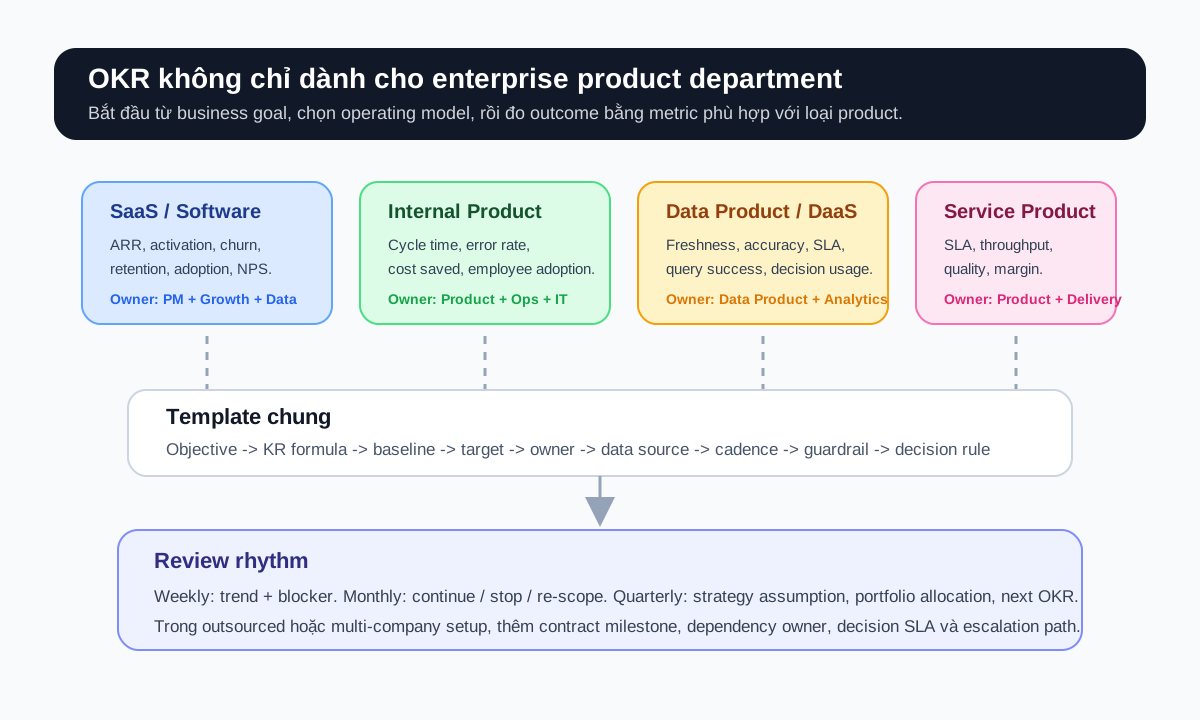
| Scenario | OKR nên tập trung vào gì | Metric nên track | Template/cấu trúc nên dùng |
|---|---|---|---|
| Software product company | Product là business chính. OKR phải nối product outcome với revenue, retention, market position và moat. | Activation rate, paid conversion, expansion revenue, churn, feature adoption, uptime, support ticket rate. | Product Strategy Memo + Product OKR Canvas + Roadmap-to-KR Map. |
| SaaS company | Đo recurring revenue và customer lifecycle. OKR nên chia theo acquisition, activation, retention, expansion, platform reliability. | ARR/MRR, NRR, GRR, logo churn, time-to-value, WAU/MAU, seats activated, trial-to-paid, CAC payback. | SaaS Funnel OKR Dashboard + Cohort Retention Sheet + Enterprise Health Dashboard. |
| Internal software trong non-software company | Product không bán ra ngoài nhưng tạo efficiency, compliance, employee productivity hoặc customer operations quality. | Process cycle time, manual hours saved, error rate, SLA, adoption by internal teams, cost avoided, audit findings reduced. | Internal Product Value Canvas + Ops Metric Dashboard + Stakeholder Adoption Plan. |
| Product-as-a-Service | Product kết hợp software, operation, delivery, support. OKR phải đo service quality và unit economics, không chỉ feature shipped. | SLA compliance, fulfillment time, rework rate, gross margin, utilization, CSAT, escalation rate, quality defect rate. | Service Blueprint OKR + SLA Scorecard + Margin/Quality Guardrail Sheet. |
| Data-as-a-Service / Data Product | Product value nằm ở dữ liệu đáng tin, dễ dùng, đúng thời điểm. OKR phải đo trust và decision usage. | Data freshness, accuracy, completeness, query success, API latency, dataset adoption, number of decisions using data, data incident count. | Data Product OKR Canvas + Data Quality SLA + Consumer Usage Dashboard. |
| Outsourced product team/vendor | OKR không được chỉ là delivery milestone. Cần kết nối outcome của client với scope, dependency, decision SLA và acceptance criteria. | Milestone predictability, accepted story rate, defect leakage, decision turnaround time, business metric proxy, release adoption. | Client-Vendor OKR Charter + Dependency/RACI Log + Outcome Acceptance Packet. |
| Multi-company / child company | Cần phân tầng OKR: holding/company group -> company con -> product line -> squad. Tránh copy OKR từ parent xuống y nguyên. | Group strategic metric, subsidiary P&L metric, product adoption/retention, cross-company dependency SLA, portfolio health. | Group-to-Subsidiary OKR Cascade + Portfolio Allocation Sheet + Cross-company Decision Log. |
| Level | Example | Không nên làm |
|---|---|---|
| Company goal | Increase net revenue retention from 102% to 112%. | "Improve product" quá chung chung. |
| Product objective | Make enterprise onboarding predictable and self-serve. | Copy revenue target làm product objective mà không rõ product lever. |
| KR | Time-to-first-value giảm từ 14 ngày xuống 7 ngày. | "Launch onboarding v2" vì đây là output, không phải outcome. |
| Initiative | Admin checklist, SSO diagnostics, onboarding health report. | Đưa mọi request vào roadmap dù không map vào KR. |
| Member goal | Data analyst publish dashboard với cohort TTFV và weekly confidence note. | Goal cá nhân tách khỏi team KR. |
Mỗi Key Result nên có công thức rõ để tránh tranh luận cuối quý. Nếu chưa có data tốt, dùng proxy metric trong 1-2 tháng nhưng phải tạo instrumentation task với owner/date.
| Metric type | Formula | Dùng cho scenario | Guardrail nên có |
|---|---|---|---|
| Activation rate | Activated accounts / eligible new accounts x 100. | SaaS, software product, PLG. | Support tickets per activated account không tăng. |
| Time-to-value | Median time from signup/contract start to first meaningful outcome. | SaaS, enterprise onboarding, internal tool rollout. | Quality score hoặc customer CSAT không giảm. |
| Adoption | Active target users / total target users x 100 trong period. | Internal product, SaaS feature, data product. | Task success rate hoặc satisfaction. |
| Retention | Users/accounts active in current period and previous period / active previous period x 100. | SaaS, consumer software, data product consumers. | Revenue quality, complaint rate, performance. |
| NRR | (Starting ARR + expansion - contraction - churn) / Starting ARR x 100. | B2B SaaS, subscription business. | Gross margin, implementation cost. |
| Cycle time reduction | (Old cycle time - new cycle time) / old cycle time x 100. | Internal software, operations product. | Error rate, rework rate, compliance exceptions. |
| Manual hours saved | Volume x minutes saved per transaction / 60. | Internal automation, workflow product. | Exception handling time, employee satisfaction. |
| Data freshness SLA | Datasets updated within SLA / total critical datasets x 100. | DaaS, analytics platform, data product. | Accuracy, completeness, incident count. |
| Decision turnaround | Median time from decision request to decision logged. | Outsourced product, multi-company, enterprise governance. | Decision quality, re-open rate. |
| SLA compliance | Requests completed within SLA / total requests x 100. | Product-as-service, support-heavy product. | Quality defect rate, margin. |
| Score | Cách đọc | Decision |
|---|---|---|
| Green | Trend đang đi đúng hướng, blocker có owner, data đáng tin. | Continue, chỉ remove dependency nhỏ. |
| Yellow | Trend chậm hoặc data/proxy chưa chắc, nhưng còn path để recover. | Re-scope, add owner, đổi initiative hoặc tăng support. |
| Red | Metric đi ngược, dependency chưa unblock, hypothesis có thể sai. | Stop/pivot, escalate decision, hoặc reset target nếu strategy đổi. |
| Template | Dùng khi nào | Fields cần có |
|---|---|---|
| Product OKR Canvas | Bắt đầu quarter hoặc khi product area cần align lại. | Company goal, product objective, customer segment, KRs, baseline, target, owner, initiatives, guardrails, risks. |
| KR Formula Sheet | Khi metric có thể bị hiểu sai hoặc chưa có dashboard chuẩn. | Metric definition, numerator, denominator, inclusion/exclusion, data source, refresh cadence, owner. |
| Roadmap-to-KR Map | Khi roadmap quá nhiều item và cần chứng minh item nào support objective nào. | Initiative, hypothesis, linked KR, expected movement, dependency, release date, evidence after launch. |
| Weekly OKR Tracker | Trong weekly product/squad review. | KR current value, baseline, target, weekly change, confidence, blocker, decision needed, next action. |
| Monthly Review Packet | Review với leadership, client, board hoặc cross-functional group. | BLUF, metric trend, learnings, risks, ask, continue/stop/re-scope recommendation. |
| Goal Alignment Sheet | Kết nối OKR với member goals và performance conversation. | Member, role, linked KR, contribution, evidence, support needed, growth skill, review date. |
| Client-Vendor OKR Charter | Outsourced product hoặc vendor cùng build product. | Client outcome, vendor deliverables, acceptance criteria, dependency owners, decision SLA, escalation path, shared dashboard. |
| Group-to-Subsidiary Cascade | Multi-company, công ty con, business unit khác nhau. | Group objective, subsidiary objective, local metric, shared dependency, conflict rule, portfolio allocation. |
| Objective | Make new enterprise customers reach first value without heavy CS intervention. |
| KR 1 | Median time-to-first-value giảm từ 14 ngày xuống 7 ngày. |
| KR 2 | Activation rate của enterprise workspace tăng từ 61% lên 80%. |
| KR 3 | Onboarding support tickets per account giảm 30%. |
| Guardrail | Enterprise CSAT onboarding không dưới 4.5/5. |
| Objective | Reduce manual dispatch work while keeping delivery accuracy high. |
| KR 1 | Manual dispatch hours giảm từ 420h/tháng xuống 210h/tháng. |
| KR 2 | Average route assignment cycle time giảm từ 18 phút xuống 6 phút. |
| KR 3 | Internal adoption đạt 85% active dispatchers/week. |
| Guardrail | Delivery exception rate không tăng quá 1%. |
| Objective | Make pricing data trusted enough for daily commercial decisions. |
| KR 1 | Critical datasets meeting freshness SLA tăng từ 72% lên 95%. |
| KR 2 | Data incident count giảm từ 12/tháng xuống 3/tháng. |
| KR 3 | Weekly active analysts using pricing dataset tăng từ 18 lên 45. |
| Guardrail | Accuracy check pass rate không dưới 98%. |
| Objective | Launch claims intake MVP that reduces manual triage for the client operations team. |
| KR 1 | 80% submitted claims pass first validation without manual correction. |
| KR 2 | Decision turnaround time for client scope questions under 2 business days. |
| KR 3 | Accepted story rate in UAT above 90%. |
| Guardrail | Critical production defect count = 0 in first 30 days. |
| Context | Problem | OKR structure | Lesson learned |
|---|---|---|---|
| Startup SaaS 20 người | Founder muốn ship 15 feature nhưng churn trial cao. | 1 objective về activation, 3 KRs quanh setup completion, time-to-value, trial-to-paid. | OKR giúp cắt roadmap xuống 4 initiatives có evidence rõ. |
| Enterprise có internal product | Finance team dùng Excel ngoài hệ thống vì tool chậm. | Objective về close process, KRs về cycle time, adoption, error rate, manual hours saved. | Internal product phải đo behavior change, không chỉ "system deployed". |
| Data platform | Leadership không tin dashboard vì số liệu lệch giữa teams. | Objective về trusted metrics, KRs về freshness, accuracy, lineage coverage, active decision usage. | Data product OKR cần metric về trust và usage, không chỉ pipeline completion. |
| Outsourced build | Vendor ship đúng sprint nhưng client business outcome không đổi. | Shared OKR charter: outcome, milestone, acceptance criteria, decision SLA, dependency log. | Outsourcing vẫn cần outcome OKR, nhưng phải thêm governance và contract guardrails. |
| Group có nhiều công ty con | Parent company muốn một platform chung nhưng công ty con có local constraints. | Group objective về platform leverage, subsidiary KRs về adoption/local compliance, shared dependency SLA. | Không copy OKR từ parent xuống y nguyên; cần local translation và conflict rule. |
| Need | Tools | Artifact nên tạo |
|---|---|---|
| Write OKR and narrative | Notion, Confluence, Google Docs, Coda. | Product OKR Canvas + decision log. |
| Track product behavior | Amplitude, Mixpanel, PostHog, GA4. | Activation, retention, funnel, feature adoption dashboard. |
| Track business/data metrics | Looker, Metabase, Power BI, Tableau. | KR dashboard with baseline, current, target, owner. |
| Track roadmap linkage | Jira Product Discovery, Linear, Productboard, Aha, Airtable. | Roadmap-to-KR Map. |
| Run review | Slides, Notion, Miro, FigJam. | Monthly OKR Review Packet with BLUF and asks. |
| Performance/member alignment | Lattice, 15Five, Leapsome, Google Sheet. | Goal Alignment Sheet and 1:1 notes. |
Khóa học liên quan đang được cập nhật.
Chấm từng chiều kỹ năng và cho ra hồ sơ — biết mình đứng ở đâu trước.
Làm bài này
Thảo luận & tài liệu thêm 0
Chia sẻ kinh nghiệm, đặt câu hỏi, hoặc đính kèm tài liệu/YouTube giúp người khác học kỹ năng này.