1
Chẩn đoán
Đánh giá mức sẵn sàng làm Business Analyst
Chấm từng chiều kỹ năng và cho ra hồ sơ — biết mình đứng ở đâu trước.
Làm bài nàyUse case, user story và acceptance criteria từ beginner đến advanced: actor, goal, flows, edge cases, Given/When/Then, QA/UAT, templates và case studies.
Đăng nhập để đánh dấu kỹ năng và theo dõi tiến độ.
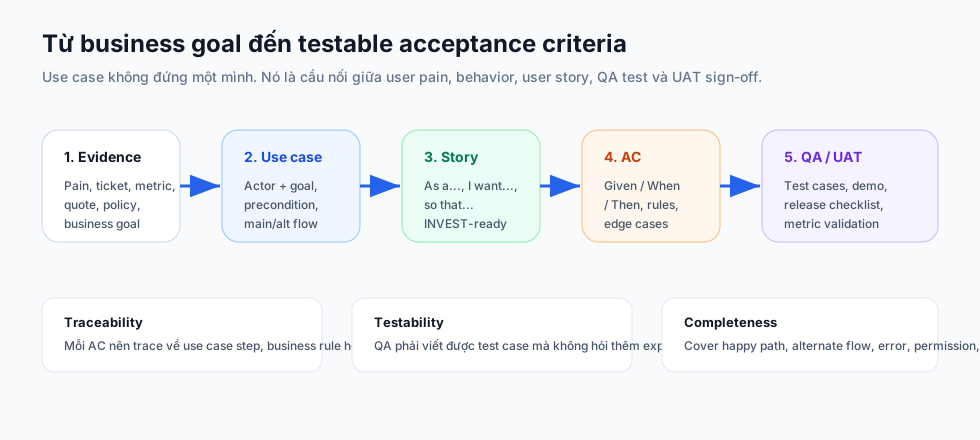
Use Case mô tả cách một actor tương tác với system để đạt một goal. Nó giúp team hiểu behavior end-to-end: trigger, precondition, happy path, alternate path, exception, postcondition và system boundary.
Acceptance Criteria (AC) định nghĩa điều kiện cụ thể để biết story/feature đã đúng, đủ, testable và có thể release. AC là contract giữa Product/BA, Engineering, QA, Design và stakeholder. Nếu AC mơ hồ, team sẽ build theo assumption, QA test theo cảm giác, và UAT dễ tranh cãi.
Nguyên tắc: Use case trả lời “actor đạt goal như thế nào?”, user story trả lời “value là gì?”, acceptance criteria trả lời “làm sao biết đã đúng?”.
| Keyword | Định nghĩa | Good example | Weak example |
|---|---|---|---|
| Actor | Người, role, hoặc external system tương tác với product. | Recruiter, Candidate, Payment Gateway, Compliance Reviewer. | User. |
| Goal | Kết quả actor muốn đạt, không phải button họ muốn bấm. | Submit return request with required evidence. | Click submit. |
| Scope/System boundary | Phần system chịu trách nhiệm và phần nằm ngoài system. | App validates return eligibility; payment provider processes refund. | Everything works. |
| Precondition | Điều kiện phải đúng trước khi flow bắt đầu. | Order is delivered, user is logged in, return window is open. | User is on page. |
| Trigger | Sự kiện bắt đầu use case. | Customer clicks “Request return”. | Start. |
| Main success scenario | Happy path chính để đạt goal. | Validate order -> collect reason/photo -> submit -> create return case -> notify customer. | Return works. |
| Alternate flow | Đường đi khác nhưng vẫn có thể đạt goal. | Payment callback timeout -> system polls provider before showing final status. | Error handled. |
| Exception flow | Đường đi thất bại hoặc bị block. | File over 10MB -> block upload and show max size message. | Show validation. |
| Postcondition | Trạng thái system sau khi flow kết thúc. | Return case status = Submitted and audit log created. | Done. |
| Given/When/Then | Format AC testable: context, action, expected outcome. | Given order is in return window, when user submits valid request, then return case is created. | User can submit. |
| Field | Cần viết gì? | Ví dụ |
|---|---|---|
| Use case name | Verb + noun + goal, ngắn và rõ. | Submit return request, Upload candidate CV, Approve discount request. |
| Primary actor | Role chính muốn đạt goal. | Customer, Recruiter, Sales Manager. |
| Supporting actors | System/team tham gia nhưng không phải actor chính. | Payment Gateway, Email Service, Finance Approver. |
| Business goal | Why behind the flow. | Reduce support tickets and shorten refund cycle time. |
| Preconditions | Điều kiện trước khi bắt đầu. | User logged in; order delivered; return window still valid. |
| Trigger | Event/action bắt đầu flow. | User clicks “Request return”. |
| Main flow | Step-by-step happy path. | System validates order -> user selects reason -> uploads photo -> submits -> system creates case. |
| Alternate flows | Valid branch khác happy path. | Photo optional for low-value item; pickup unavailable in region. |
| Exception flows | Invalid/error/blocked cases. | Return window expired; duplicate request; file too large; permission denied. |
| Postconditions | State sau khi flow kết thúc. | Return case created, status = Submitted, customer notified. |
| Business rules | Policy/decision/calculation. | Auto-approve refund under 200k if delivered within 7 days and no fraud flag. |
| Non-functional needs | Performance, security, audit, accessibility. | Submit response under 2 seconds; audit log stores user, timestamp and decision. |
Gherkin format giúp AC rõ vì nó tách context, trigger và expected result. Không phải mọi AC bắt buộc dùng Gherkin, nhưng với behavior phức tạp, validation, workflow, permission, payment, notification hoặc integration, Given/When/Then giúp giảm hiểu nhầm mạnh.
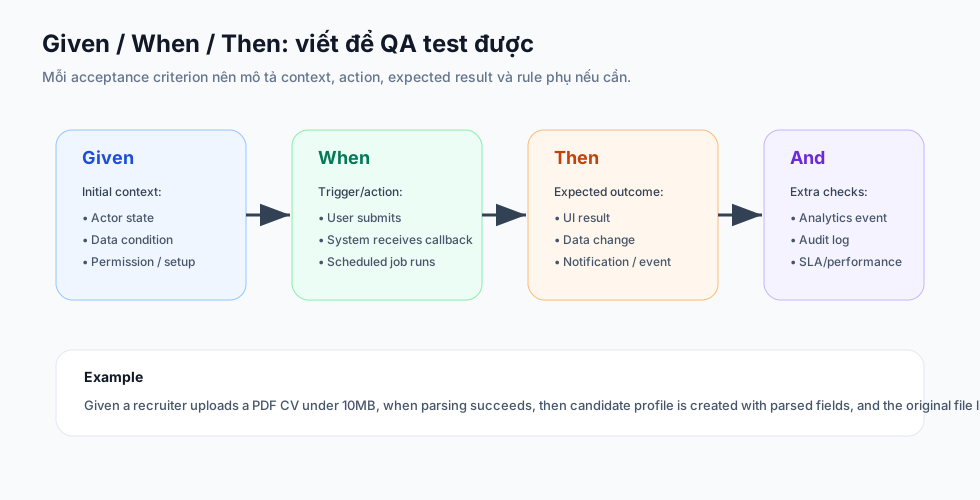
Given [initial context / data / permission]
When [actor or system action occurs]
Then [observable expected result]
And [secondary result: data, event, email, audit, notification]| AC type | What to cover | Example |
|---|---|---|
| Happy path | Successful expected flow. | Given a valid PDF under 10MB, when recruiter uploads it, then candidate profile is created with parsed name, email and skills. |
| Validation | Required fields, format, limits. | Given file is over 10MB, when user uploads it, then system blocks upload and shows “Maximum file size is 10MB”. |
| Permission | Who can/cannot perform action. | Given user is not assigned to the job, when they open candidate detail, then salary expectation is hidden. |
| Duplicate | Existing records or repeated action. | Given candidate email already exists for this job, when recruiter uploads CV, then system shows duplicate warning and offers merge/cancel. |
| Integration | External callback, retry, timeout. | Given payment callback is not received within 60 seconds, when checkout is pending, then system polls provider status every 15 seconds for 2 minutes. |
| Analytics | Events/properties needed for measurement. | Given filter is applied, when candidate list refreshes, then event candidate_filter_applied records filter_type and result_count. |
| Title | [Actor] can [action] to [goal]. Example: Recruiter can upload CV to create candidate profile. |
| User story | As a recruiter, I want to upload a candidate CV so that I can create a candidate profile without manual data entry. |
| Business context | Manual candidate entry takes 8 minutes per CV and causes missing phone/email fields. |
| Scope | PDF/DOCX upload, file validation, parsing, profile creation, duplicate warning. Excludes ranking model improvements. |
| Design/link | Figma screen, flow, prototype or wireframe. |
| Use case link | UC-12 Upload candidate CV. |
| Acceptance criteria | Happy path, validation, duplicate, low-confidence parsing, permission, analytics. |
| Open questions | What fields are mandatory? How should password-protected PDF behave? Who can merge duplicates? |
| Definition of done | AC pass, tests added, analytics verified, UAT accepted by recruiter lead. |
| Input | Bad version | Better version |
|---|---|---|
| Pain | “Need better upload.” | Recruiters spend 8 minutes manually entering candidate data after receiving CVs. |
| Requirement | “System parses CV.” | System shall extract name, email, phone, skills and work history from PDF/DOCX CV under 10MB. |
| User story | “As a user I upload CV.” | As a recruiter, I want to upload a candidate CV so that I can create a review-ready profile without manual data entry. |
| AC | “Upload should work.” | Given recruiter uploads a valid PDF under 10MB, when parsing succeeds, then candidate profile is created with parsed fields and original CV link. |
| Edge case | “Show error.” | Given PDF is password-protected, when recruiter uploads it, then system blocks parsing and asks recruiter to upload an unlocked file. |
Business context: E-commerce checkout có nhiều đơn bị stuck ở “pending payment”. Customer nghĩ đã trả tiền, support không biết nên retry hay cancel, finance lo double-charge.
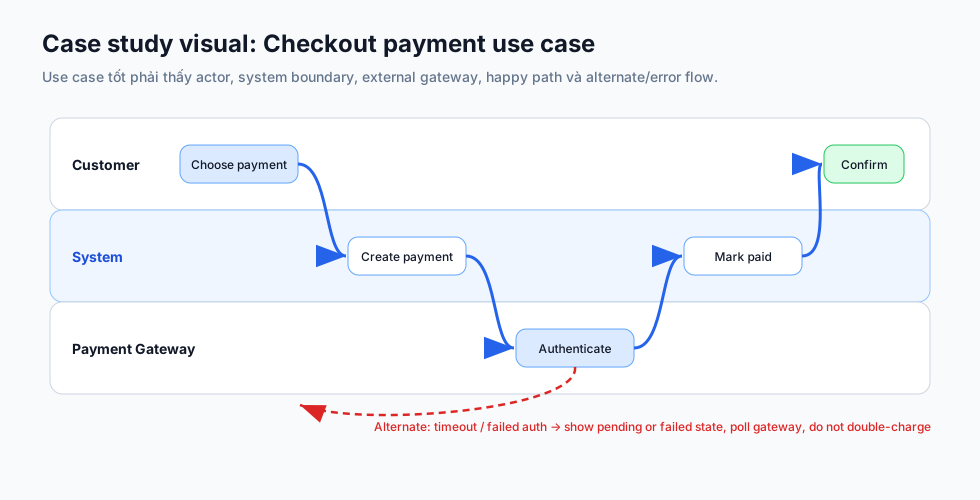
| Use case | Customer pays order through payment gateway. |
| Actor | Customer. |
| Supporting actor | Payment Gateway, Email/SMS Service. |
| Precondition | Order exists, amount is calculated, inventory reserved, customer is on checkout page. |
| Main flow | Customer selects MoMo -> system creates payment request -> customer authenticates -> gateway callback success -> system marks order paid -> confirmation sent. |
| Alternate flow | Callback timeout -> system shows pending -> polls gateway -> resolves paid/failed without duplicate charge. |
| Exception | Gateway declines payment, amount mismatch, duplicate callback, inventory no longer available. |
Acceptance Criteria examples:
Evidence: Recruiters upload the same candidate multiple times because agencies send duplicate CVs. Hiring managers see duplicate profiles and interview history is fragmented.
| Artifact | Content |
|---|---|
| Use case | Recruiter uploads candidate CV to create or update candidate profile. |
| Business rule | Email is primary duplicate key within same job; phone is secondary confidence signal. |
| User story | As a recruiter, I want duplicate warnings during CV upload so that I do not create fragmented candidate records. |
| AC 1 | Given uploaded CV email matches existing candidate in same job, when parsing completes, then system shows duplicate warning with existing candidate link. |
| AC 2 | Given recruiter chooses merge, when they confirm, then parsed fields update empty fields only and preserve interview notes. |
| AC 3 | Given recruiter does not have permission to merge, when duplicate is detected, then merge action is disabled and manager approval message appears. |
Problem: Employee says “approval is too slow”. A weak story says “User can approve faster”. A strong use case reveals missing budget code, security review, vendor tax info, and approval threshold.
| Use case step | Requirement/AC detail | Why it matters |
|---|---|---|
| Submit request | Given vendor handles customer data, when employee submits request, then security review is added before finance approval. | Prevents compliance risk. |
| Budget validation | Given budget code has insufficient funds, when request is submitted, then system blocks submission and shows budget owner. | Avoids approval ping-pong. |
| Approval routing | Given amount is over 50M VND, when request is valid, then department head approval is required. | Encodes business policy. |
| Status visibility | Given request is pending, when employee views status, then current owner, due date and missing action are shown. | Reduces status-chasing messages. |
Một use case có thể lớn hơn một user story. Split story theo risk và value, không split tùy tiện theo technical layer nếu user không nhận được value.
| Split method | Khi nào dùng | Example |
|---|---|---|
| Happy path first | Flow phức tạp, cần release nhanh. | Upload valid CV and create profile before adding duplicate merge. |
| Business rule | Policy nhiều threshold. | Discount under 15%, over 15%, custom legal clause. |
| User role | Different permissions/needs. | Recruiter uploads CV; Hiring Manager reviews parsed candidate; Admin merges duplicates. |
| Data source | Integration risk lớn. | Manual upload first, ATS import later. |
| Exception path | Error case quan trọng nhưng có thể phase sau. | Valid payment first, timeout/polling next if gateway risk manageable. |
Chấm từng chiều kỹ năng và cho ra hồ sơ — biết mình đứng ở đâu trước.
Làm bài này
Thảo luận & tài liệu thêm 0
Chia sẻ kinh nghiệm, đặt câu hỏi, hoặc đính kèm tài liệu/YouTube giúp người khác học kỹ năng này.