1
Chẩn đoán
Đánh giá mức sẵn sàng làm Business Analyst
Chấm từng chiều kỹ năng và cho ra hồ sơ — biết mình đứng ở đâu trước.
Làm bài này Product Management
Backlog management từ intake, triage, discovery, prioritization đến ready queue: templates, backlog health, case studies và operating cadence.
Đăng nhập để đánh dấu kỹ năng và theo dõi tiến độ.
Backlog là inventory của opportunities, problems, requirements, tech work và decisions. Backlog mạnh không chỉ “có nhiều ticket”; nó giúp team biết việc nào cần discover, việc nào ready để build, việc nào nên reject, và việc nào cần monitor.
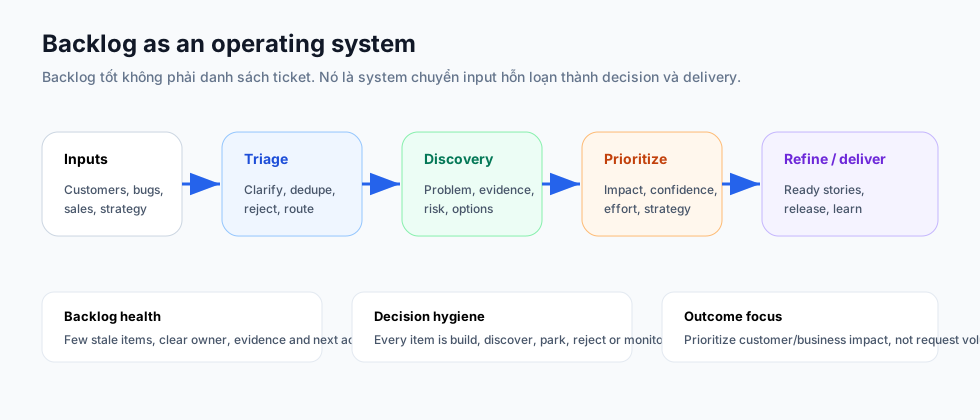
| Concept | Meaning | Good evidence |
|---|---|---|
| Backlog item | Problem/opportunity/work item có owner và next action. | Source, impact, decision needed. |
| Triage | Dedupe, clarify, route, reject, park or accept. | Request source, severity, affected segment. |
| Ready | Item đủ rõ để team estimate/build. | Goal, AC, dependency, design/data notes. |
| Priority | Order based on outcome, strategy, risk and effort. | RICE/ICE/custom score + rationale. |
| Backlog health | Freshness, clarity, ownership, low duplication. | Age, stale count, ready ratio, blocked items. |
| Field | What to write | Example |
|---|---|---|
| Source | Customer, sales, support, exec, data, strategy. | Support tickets from enterprise admins. |
| Problem | User pain and context. | Admins cannot see failed invites, causing onboarding delays. |
| Evidence | Ticket count, quote, metric, user segment. | 18 tickets in 30 days; 4 enterprise customers affected. |
| Impact | Business/customer consequence. | Activation delayed by 2-5 days. |
| Next action | Discover, refine, build, reject, park. | Discover: interview 3 admins and inspect invite logs. |
| Owner/date | Who drives next step and by when. | PM + Tech Lead, Friday. |
| Situation | Best action | Why |
|---|---|---|
| High impact, unclear problem | Discovery first | Do not build assumptions. |
| High impact, clear AC, small effort | Ready for sprint | Low risk, high value. |
| CEO request, weak evidence | Clarify strategic rationale | Authority is not evidence. |
| Many duplicates | Merge under one opportunity | Preserve signal without clutter. |
| Old stale idea | Archive or revalidate | Backlog should not be a graveyard. |
Context: Sales requests “AI matching”, support requests “duplicate candidate fix”, recruiters request “explain score”. A weak backlog has three separate epics. A strong backlog groups them into one opportunity: recruiter trust in candidate evaluation.
Chấm từng chiều kỹ năng và cho ra hồ sơ — biết mình đứng ở đâu trước.
Làm bài nàyHọc kỹ năng này ở đâu?
Có 3 khóa dạy đúng phần này, miễn phí và bằng tiếng Việt.
Thảo luận & tài liệu thêm 0
Chia sẻ kinh nghiệm, đặt câu hỏi, hoặc đính kèm tài liệu/YouTube giúp người khác học kỹ năng này.